Loading

How Much Does a Tree Surgeon Cost? What Affects the Price?

  • Home
  • Blogs
  • How Much Does a Tree Surgeon Cost? What Affects the Price?
If you need a tree pruned, reduced or removed, one of the first questions you’re likely to have is: how much does a tree surgeon cost?
 
There isn’t a single price that applies to every tree surgery job. The cost depends on factors such as the size and condition of the tree, the type of work required, access to the site, the equipment and number of tree surgeons needed, and what needs to happen to the branches and timber afterwards.
 
A small pruning job on an easily accessible tree will naturally cost considerably less than removing a large tree in a restricted garden where specialist equipment and careful dismantling are required.
 
At Oxleas Tree Care, we provide professional tree surgery across South East London and Kent. Here we explain the main factors that determine the cost of tree surgery and what to consider when obtaining a quotation.

What Determines the Cost of a Tree Surgeon?

Tree surgeons need to consider much more than the height of a tree when pricing a job.
 
Every tree and site is different, so a professional quotation will normally take into account the tree itself, the work being requested, potential hazards, access and the resources required to complete the work safely.
 
Here are some of the most important factors.

1. The Size of the Tree

Unsurprisingly, tree size is one of the biggest factors affecting tree surgery costs.
 
A small tree that can be worked on relatively easily may require considerably less time, equipment and manpower than a large mature tree.
 
With larger trees, the work may involve specialist climbing and rigging techniques, additional tree surgeons on the ground, more equipment and significantly more material to process and remove.
 
Height isn’t the only consideration. The width and density of the crown, trunk diameter and overall structure of the tree can all affect the amount of work involved.

2. What Tree Work Is Required?

The type of tree surgery required will have a significant effect on the price.
For example, there can be a considerable difference between removing a few dead branches and completely dismantling a mature tree.
 
Common tree surgery services include:
 
Tree pruning – selectively removing branches to improve the tree’s structure, condition or clearance.
 
Crown reduction – reducing the overall height or spread of the crown while retaining an appropriate natural shape.
 
Crown thinning – selectively removing branches within the crown to reduce density.
 
Crown lifting – removing or shortening lower branches to increase clearance underneath the tree.
 
Tree felling – removing a tree, either by felling it from ground level where space allows or dismantling it progressively.
 
Stump grinding – removing the remaining stump after a tree has been felled.
 
The appropriate work should be determined by what the tree actually requires rather than simply choosing the cheapest option.

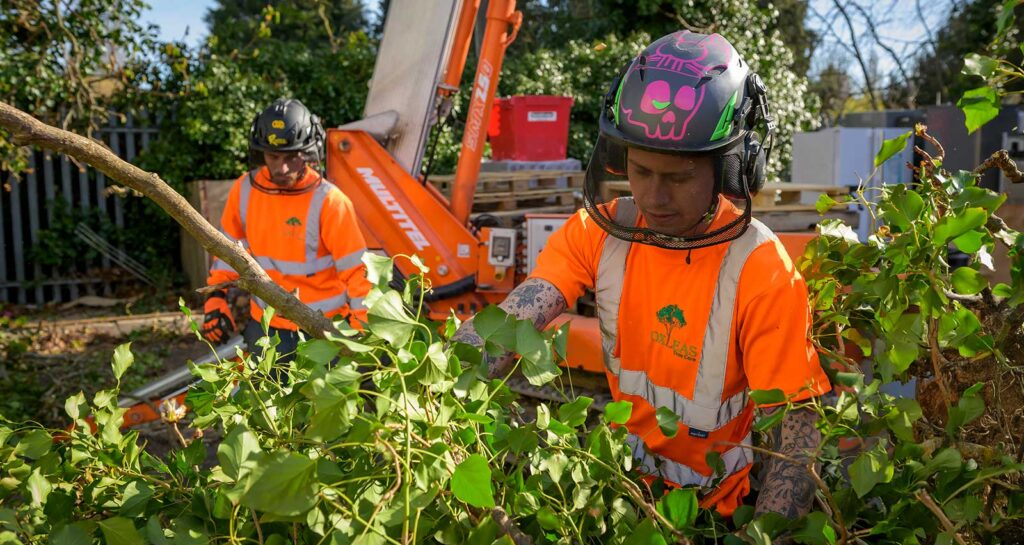
3. How Easy Is It to Access the Tree?

Access can make a substantial difference to the cost of tree surgery.
 
A tree positioned in a large garden with straightforward access for the team and equipment is very different from a tree behind a terraced property where everything has to be carried through the house or down a narrow side passage.
 
Restricted access can affect how equipment reaches the tree, how branches are lowered and how waste is removed from the property.
 
When requesting a quotation, explaining any access restrictions – and providing photographs where possible – can help the tree surgeon understand what will be involved.

4. Is the Tree Close to Buildings or Other Obstacles?

The surroundings of the tree are particularly important.
 
A tree standing in an open area may sometimes be relatively straightforward to work on. The same-sized tree situated immediately beside a house, conservatory, greenhouse, road or neighbouring property can require a much more controlled approach.
 
Branches may need to be carefully lowered using ropes and specialist rigging equipment rather than simply being allowed to fall.
Other obstacles can include fences, sheds, garden structures, parked vehicles and overhead services.
 
The more controlled the operation needs to be, the greater the time and resources that may be required.

5. The Condition of the Tree

The health and structural condition of the tree can also affect the work involved.
 
A healthy tree may provide suitable anchor points and predictable timber characteristics for a trained climber. A tree that is dead, decaying, storm damaged or structurally compromised may present additional hazards.
 
Where there are concerns about the condition or stability of a tree, an assessment may be needed before deciding how the work should be undertaken.
 
This is particularly important for dangerous or storm-damaged trees, where safety needs to take priority over speed or cost.

6. Will Specialist Equipment Be Required?

Professional tree surgery can involve a considerable amount of specialist equipment.
 
Depending on the job, this might include chainsaws, climbing equipment, ropes and rigging systems, wood chippers, stump grinders or access equipment.
 
Some jobs may also require additional machinery because the tree cannot safely or practically be managed using standard climbing techniques.
 
The equipment required will therefore form part of the overall quotation.

7. How Much Waste Needs to Be Removed?

A surprisingly large amount of material can come from even a relatively modest tree.
 
Once branches are removed, they normally need to be processed. Smaller branches can be chipped, while larger sections of timber need to be cut into manageable pieces.
 
Your quotation should make clear what will happen to this material.
 
Depending on what you agree with the tree surgeon, woodchip or logs might be left for your own use, or the team may remove the resulting material from the site.
 
Removing and disposing of large quantities of tree waste takes additional time and resources and can therefore affect the final cost.

8. Do You Need the Stump Removed?

Tree felling and stump removal are normally considered separate operations.
 
After a tree has been felled, the stump and root system remain in the ground. If you want the visible stump removed, stump grinding can be carried out to grind it down below ground level.
 
Whether this is necessary depends on what you plan to do with the area afterwards.
 
If stump grinding is required, this should be discussed when obtaining your quotation so that it can be included within the proposed work.

Can a Tree Surgeon Give Me a Price From a Photograph?

Photographs can be very useful for an initial discussion, particularly if they clearly show the whole tree and its surroundings.
However, for more substantial or complex work, a site visit is often the best way to provide an accurate quotation.
 
Seeing the tree in person allows the tree surgeon to assess its size and condition, access, nearby structures and other factors that may not be obvious from a photograph.
 
It also provides an opportunity to discuss what you want to achieve and whether the work you’re considering is the most appropriate option.

Should I Choose the Cheapest Tree Surgeon?

Price is important, but it shouldn’t be the only consideration when choosing someone to work on your trees.
 
Tree surgery can involve chainsaws, working at height, heavy branches and potentially dangerous situations. Poorly executed tree work can also cause lasting damage to the tree itself.
 
When comparing quotations, consider the experience and qualifications of the team, insurance, professional standards, equipment, proposed method of work and exactly what is included in the price.
 
A quotation that appears cheaper may not necessarily represent better value if important elements of the work have been excluded.

Does a TPO Affect the Cost of Tree Surgery?

If a tree is protected by a Tree Preservation Order (TPO), consent may be required from the local planning authority before work is carried out.
 
Trees within conservation areas can also be subject to additional requirements.
 
The protection itself doesn’t determine the physical cost of carrying out the tree surgery, but obtaining the appropriate consent and ensuring that the approved specification is followed may form part of planning the work.
 
If you don’t know whether your tree is protected, this should be checked before work begins.
 

How Can I Get an Accurate Tree Surgery Quote?

The best way to establish the cost is to have the tree and site assessed.
 
When asking for a quotation, provide as much information as possible about the tree, what you would like done and any access restrictions. Photographs can also be useful before a site visit.
 
A professional quotation should clearly describe the proposed work and what is included, so you can understand exactly what you’re paying for.

Tree Surgeon Quotes Across South East London and Kent

There is no meaningful one-size-fits-all answer to how much a tree surgeon costs. A quotation should reflect the actual tree, its location and the work required to complete the job professionally and safely.
 
Oxleas Tree Care provides professional tree surgery, tree pruning, tree felling, tree removal, stump grinding and tree maintenance across South East London and Kent.
 
Our team can assess your tree, discuss the appropriate work and provide a quotation based on your individual requirements.
 
Need a quote for tree work? Contact Oxleas Tree Care to arrange an assessment.

Frequently Asked Questions

How much does it cost to have a tree cut down?

The cost depends on the size and condition of the tree, access, its proximity to buildings and the method required to remove it safely. The best way to obtain an accurate figure is to have the tree assessed.

Location and access can completely change the complexity of the job. A tree in an open garden may be relatively straightforward, while a similar tree beside a building with restricted access may need to be carefully dismantled and lowered in sections.

This depends on the quotation. Make sure it clearly states whether branches, woodchip and timber will be removed or left on site.

Not necessarily. Stump grinding is normally a separate service, so ask for it to be included if you want the stump removed after felling.

Photographs can help with an initial assessment, but a site visit may be required for an accurate quotation, particularly for larger or more complicated trees.

It can be, but not always. The cost depends on the extent and complexity of the pruning, the tree’s size and location, and the equipment and team required.

Accredited by

Acclaim
ARB Approved Contractor
SSIP
Construction Line Gold Member
TrustMark

Trusted by Leading Businesses and Organisations

London Borough of Bexley
isha90
Soho Housing
Network Rail
Lewisham
Royal Borough of Greenwich
Trams
Vinci
Greater London Authority
Phoenix