Loading

Do I Need Permission to Cut Down a Tree? A Guide to TPOs and Conservation Areas

  • Home
  • Blogs
  • Do I Need Permission to Cut Down a Tree? A Guide to TPOs and Conservation Areas
If you’re thinking about cutting down or carrying out significant work to a tree on your property, it is important to check whether the tree is protected before any work begins.

In England, a tree may be protected by a Tree Preservation Order (TPO) or because it is located within a conservation area. If either applies, you may need consent from your local planning authority or need to notify them before carrying out the work.

At Oxleas Tree Care, we work with homeowners and property owners across South East London and Kent, providing professional tree surgery and advice on the appropriate course of action for individual trees.

What is a Tree Preservation Order?

A Tree Preservation Order, commonly known as a TPO, is made by a local planning authority to protect individual trees, groups of trees or woodland where their preservation is considered important for local amenity.
A TPO can prevent a tree from being cut down, topped, lopped, uprooted, wilfully damaged or destroyed without written consent from the local planning authority. Cutting the roots of a protected tree can also require consent.

Importantly, a TPO does not necessarily mean that no work can ever be carried out. It means that the appropriate permission generally needs to be obtained before the work begins.

How Do I Know If My Tree Has a TPO?

Before arranging tree felling or substantial pruning, check whether the tree is protected.
Your local council is the best place to start. Many councils provide online maps or information about Tree Preservation Orders and conservation areas. If you’re unsure, you can contact the local planning authority directly.
It is worth checking rather than assuming that a tree is unprotected simply because it is within your own garden.

Can I Cut Down a Tree With a TPO?

Potentially, yes – but in most circumstances you will need to apply to the local planning authority for consent first.

Your application needs to explain the proposed work and provide sufficient information for the council to assess it. For tree felling, this can include the reasons for removing the tree and details of any proposed replacement planting.
Depending on the circumstances, alternatives to complete removal may also be appropriate. Professional tree pruning, crown reduction or other tree-management work may sometimes address the underlying problem while retaining the tree.

This is one reason why having the tree professionally assessed before deciding what to do can be worthwhile.

What If My Property Is in a Conservation Area?

Trees within conservation areas also receive additional protection.

If a tree is within a conservation area and is not already protected by a TPO, you will generally need to give your local planning authority six weeks’ notice before carrying out qualifying work. This is commonly known as a Section 211 notice.

The notice gives the council an opportunity to consider the proposed work and decide whether the tree should be protected by a TPO.

The rules generally apply to trees with a stem diameter greater than 75mm when measured 1.5 metres above ground level, although there are exceptions.

If a tree in a conservation area already has a TPO, the TPO rules apply.

What Happens After I Notify the Council?

For work to a qualifying tree in a conservation area, the local planning authority has a six-week period in which to consider the proposal.
It can decide not to make a TPO and allow the work to proceed, allow the six-week period to expire without making an order, or make a TPO to provide the tree with additional protection.
This is slightly different from making an application for work to an existing TPO-protected tree. A Section 211 notice is a notification, rather than an application for consent.

What About Dead or Dangerous Trees?

There are exemptions within the legislation, but this is an area where homeowners should be particularly careful.

For example, urgent work may be possible where a tree presents an immediate risk of serious harm. There are also specific provisions relating to dead trees. However, different notification requirements can apply depending on the circumstances. Government guidance states that, unless work is urgently required because of an immediate risk of serious harm, five working days’ written notice should be given before certain work to a dead protected tree.

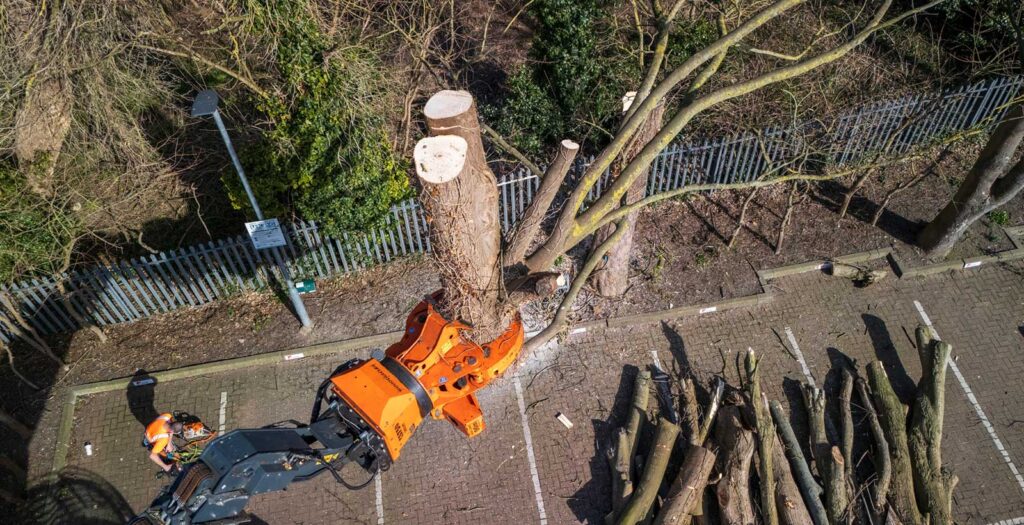
A tree that simply appears unhealthy should not automatically be assumed to qualify for an exemption. Government guidance specifically notes that work to diseased or dying TPO trees still requires consent unless another exemption applies.
If you believe a tree is dangerous, obtaining professional advice and keeping appropriate evidence of its condition is sensible.

What Happens If I Cut Down a Protected Tree Without Permission?

Carrying out unauthorised work to a protected tree can be an offence.
This can apply not only to felling but also to unauthorised topping, lopping, uprooting, wilful damage or destruction. Similar enforcement provisions can apply where qualifying work is undertaken to a tree in a conservation area without the required notice.
For that reason, it is always better to establish the tree’s status before work begins.

Do I Need Permission to Prune a Protected Tree?

Potentially, yes.
A common misconception is that protection only prevents a tree from being completely removed. A TPO can also restrict pruning activities such as topping and lopping.
Even if branches from a neighbour’s protected tree overhang your property, you should contact the local planning authority before carrying out work to them.

Do I Need a Tree Survey?

Not every tree requires a formal tree survey before routine work, but professional assessment can be particularly useful where:
A professional assessment can help establish the condition of the tree and determine an appropriate course of action.

Professional Tree Advice Across South East London and Kent

If you’re unsure whether a tree can be removed or what work it requires, Oxleas Tree Care can assess the tree and advise on the appropriate next steps.

Our experienced team provides professional tree surveys, tree pruning, tree felling, tree removal and wider tree care services across South East London and Kent.

Where a tree is protected, it is important to establish the relevant requirements before work begins. We can help you understand the work the tree requires and ensure the proposed tree work is properly planned.

Need advice about a tree on your property? Contact Oxleas Tree Care to arrange an assessment.

Frequently Asked Questions

Can I cut down a tree in my own garden?

Yes, in many cases. However, you should first establish whether the tree is covered by a TPO, situated within a conservation area or subject to another relevant restriction.

Contact your local planning authority or check your council’s online planning and tree information. Many councils provide online TPO and conservation-area maps.

The Planning Portal advises that an application for work to a TPO-protected tree can take up to eight weeks once the local authority has accepted a valid application.

For qualifying trees that are not already covered by a TPO, you generally need to give the local planning authority six weeks’ notice before carrying out the work.

Yes, appropriate pruning may be permitted, but you generally need consent from the local planning authority before carrying out work such as topping or lopping.

Yes. Government guidance confirms that an arboricultural contractor or another person can act as the applicant’s agent.

Accredited by

Acclaim
ARB Approved Contractor
SSIP
Construction Line Gold Member
TrustMark

Trusted by Leading Businesses and Organisations

London Borough of Bexley
isha90
Soho Housing
Network Rail
Lewisham
Royal Borough of Greenwich
Trams
Vinci
Greater London Authority
Phoenix