Loading

When Should a Tree Be Pruned? A Seasonal Guide for UK Homeowners

  • Home
  • Blogs
  • When Should a Tree Be Pruned? A Seasonal Guide for UK Homeowners
Knowing when to prune a tree can make a significant difference to its health, appearance and long-term development. While many trees benefit from pruning during the dormant months, there is no single best time that applies to every species or every type of tree work.
 
The right time depends on the species of tree, its condition, the reason for pruning and the amount of work required. Some trees are best pruned during winter, while others should be pruned in summer or at specific times of the year.
 
At Oxleas Tree Care, we provide professional tree pruning and tree maintenance across South East London and Kent. In this guide, we explain when trees should be pruned and why timing matters.

Why Do Trees Need Pruning?

Professional tree pruning isn’t simply about making a tree look tidier. When carried out correctly, pruning can help maintain the health, safety and structure of a tree.
 
Common reasons for pruning include removing dead, damaged or diseased branches, improving the tree’s shape and structure, managing its size and spread, increasing clearance from buildings or other structures, and reducing problems caused by crossing or poorly positioned branches.
Pruning can also be used to manage the tree’s crown through techniques such as crown reduction, crown thinning and crown lifting.
 
The appropriate technique should be determined by what the tree actually needs rather than simply removing branches unnecessarily.

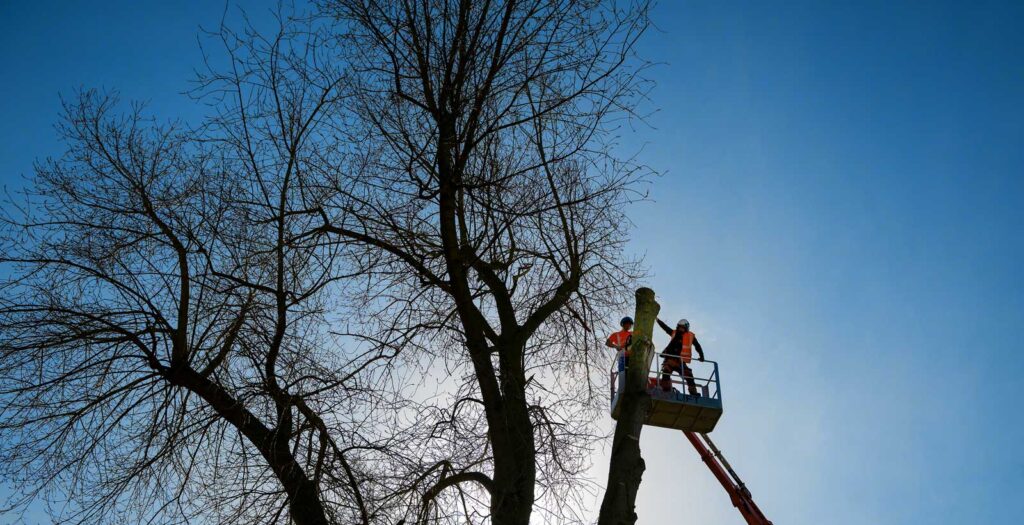
Is Winter the Best Time to Prune Trees?

For many deciduous trees, late autumn and winter can be a suitable time for pruning because the tree is dormant and has lost its leaves.
 
Dormancy can make it easier to assess the branch structure and identify damaged, crossing or poorly positioned branches. Pruning at this time can also minimise disruption to the tree’s active growing period.
 
However, winter pruning is not appropriate for every species. Certain trees have specific pruning requirements, which is why identifying the species before substantial work is important.

Can Trees Be Pruned in Spring?

Some tree pruning can be carried out during spring, but additional consideration is needed at this time of year.
Trees are entering an active period of growth, and wildlife is also becoming increasingly active.
 
Particular care needs to be taken around nesting birds. In the UK, active wild bird nests, eggs and young are legally protected. Tree work should therefore be carefully assessed before pruning begins, and work affecting an active nest may need to be postponed.
 
Spring can still be appropriate for certain types of maintenance, but the tree species, extent of pruning and presence of wildlife should all be considered.

Can Trees Be Pruned During Summer?

Yes. Summer pruning can be appropriate for certain trees and particular objectives.
 
Because a tree is in leaf, summer can provide a good opportunity to assess the density and spread of its canopy. Selective pruning may be used to manage growth, improve clearance or address particular branches.
 
However, substantial pruning during active growth isn’t automatically appropriate. Removing excessive foliage can affect the tree’s ability to photosynthesise and may place it under unnecessary stress.
 
A professional tree surgeon should therefore assess how much material can reasonably be removed.

What About Pruning Trees in Autumn?

Autumn is often a transitional period for trees as they move towards dormancy.
 
Whether pruning is appropriate will depend on the species and the work required. For some trees, waiting until full dormancy may be preferable, while urgent work involving damaged or unsafe branches may need to be addressed sooner.
 
This highlights an important distinction: the ideal season for routine pruning and the appropriate time to deal with a potentially hazardous branch are not necessarily the same thing.

When Should Oak Trees Be Pruned?

Oak trees require particular consideration.
 
Routine pruning is commonly undertaken during the dormant period, although the appropriate timing will depend on the tree and the work required.
 
In areas affected by Oak Processionary Moth (OPM), additional precautions may also be necessary. OPM caterpillars and their nests contain hairs that can cause irritation and present health risks to people and animals. Government guidance recommends avoiding direct contact with caterpillars and nests and using appropriately trained professionals where management is required.
 
Oxleas Tree Care also provides specialist OPM removal, so if you notice unusual caterpillars or nests on an oak tree, seek professional advice rather than attempting to remove them yourself.

When Should Fruit Trees Be Pruned?

Fruit trees are a good example of why there isn’t one universal pruning season.
 
Apple and pear trees are commonly pruned during winter when they are dormant, although trained forms can also receive summer pruning.
 
Stone fruit trees, including cherries and plums, are different. The Royal Horticultural Society recommends pruning these during spring or summer rather than winter because pruning at the wrong time can increase susceptibility to diseases such as silver leaf.
 
The species should therefore always be identified before deciding when to prune.

What Are the Signs That a Tree Needs Pruning?

Sometimes the tree itself provides clear indications that professional attention may be needed.
 
These can include dead or broken branches, branches rubbing or crossing one another, excessive growth towards a building, branches obstructing paths or access, an overly dense or unbalanced crown, storm damage, or visible deterioration within particular branches.
 
Not every issue means the tree needs heavy pruning. In many situations, targeted tree maintenance is preferable to unnecessarily removing large sections of the crown.

Can I Prune a Tree Myself?

Small-scale pruning of accessible branches may be manageable for some homeowners, provided the work can be carried out safely and the tree isn’t protected.
 
Larger tree work is very different.
 
Branches can be considerably heavier than they appear, and working at height or using chainsaws and other specialist equipment introduces significant risks. Poor pruning can also permanently damage the tree.
 
Where work involves large branches, height, buildings, roads, power lines or uncertainty about the tree’s condition, using a professional tree surgeon is the safer option.

Do I Need Permission Before Pruning a Tree?

Potentially.
 
A tree may be protected by a Tree Preservation Order (TPO) or be located within a conservation area. In these circumstances, consent or notification may be required before pruning takes place.
 
A TPO can protect a tree against unauthorised cutting down, topping, lopping, uprooting, wilful damage or destruction.
 
If you’re unsure whether your tree is protected, check with your local planning authority before starting work.
Internal link opportunity: This is where I would link directly to the previous article, “Do I Need Permission to Cut Down a Tree? A Guide to TPOs and Conservation Areas.”

Does Every Tree Need to Be Pruned Regularly?

No.
 
Trees shouldn’t be pruned simply because a certain amount of time has passed. Some trees may require relatively little intervention, while others need more regular management because of their species, location, age, condition or proximity to buildings and public areas.
 
The objective should be appropriate tree management, not unnecessary pruning.
 
Having a tree periodically assessed can help identify problems early and determine whether any work is actually required.

Professional Tree Pruning Across South East London and Kent

The best time to prune a tree depends on far more than the season.
 
The species, age and condition of the tree, its surroundings and the reason for carrying out the work should all be considered before pruning begins.
 
Oxleas Tree Care provides professional tree pruning, tree maintenance, tree surveys and wider tree care services across South East London and Kent. Our team can assess your tree, recommend the appropriate pruning technique and determine the right time for the work to be carried out.
 
Not sure whether your tree needs pruning? Contact Oxleas Tree Care for professional advice and a quotation.

Frequently Asked Questions

What is the best month to prune trees in the UK?

There isn’t one best month for every tree. Many deciduous trees can be pruned during their dormant period, but some species have specific requirements and are better pruned at other times of the year.

Yes. Winter is a suitable pruning period for many deciduous trees because they are dormant and their branch structure is easier to see. However, this doesn’t apply universally.

Yes. Summer pruning can be useful for particular species and for controlling or assessing growth, although excessive foliage removal should be avoided.

Dead or damaged branches should be professionally assessed, particularly if they could fall onto people, buildings, vehicles or neighbouring property. Safety-related work shouldn’t necessarily be delayed simply to reach the ideal routine pruning season.

Tree work must not unlawfully damage or destroy active wild bird nests. Trees should be checked before work begins, and pruning may need to be postponed if an active nest would be affected.

You may do if the tree is protected by a Tree Preservation Order or situated within a conservation area. Check the tree’s status before carrying out substantial work.

Accredited by

Acclaim
ARB Approved Contractor
SSIP
Construction Line Gold Member
TrustMark

Trusted by Leading Businesses and Organisations

London Borough of Bexley
isha90
Soho Housing
Network Rail
Lewisham
Royal Borough of Greenwich
Trams
Vinci
Greater London Authority
Phoenix